
What is Emotional Anatomy?
Emotional Anatomy is the study of how emotional experiences are expressed through the physical body.
Every emotion carries a response. Our body changes, prepares for action and adapts. Through repetition and experience, these responses become familiar ways of holding, moving and responding.
Our Emotional Anatomy is the living expression of this history.
LEARN THE LANGUAGE OF BEING HUMANThe Body Carries Our Emotional Story

WE EXPERIENCE
Life happens. We perceive, interpret and respond based on our unique history, needs and environment.

THE BODY RESPONDS
Perception and meaning trigger emotion. Emotion moves through chemistry, the nervous system and into the body.

PATTERNS FORM
Through repetition, responses become familiar patterns of holding, moving and responding to life.
The Language Of Our Body
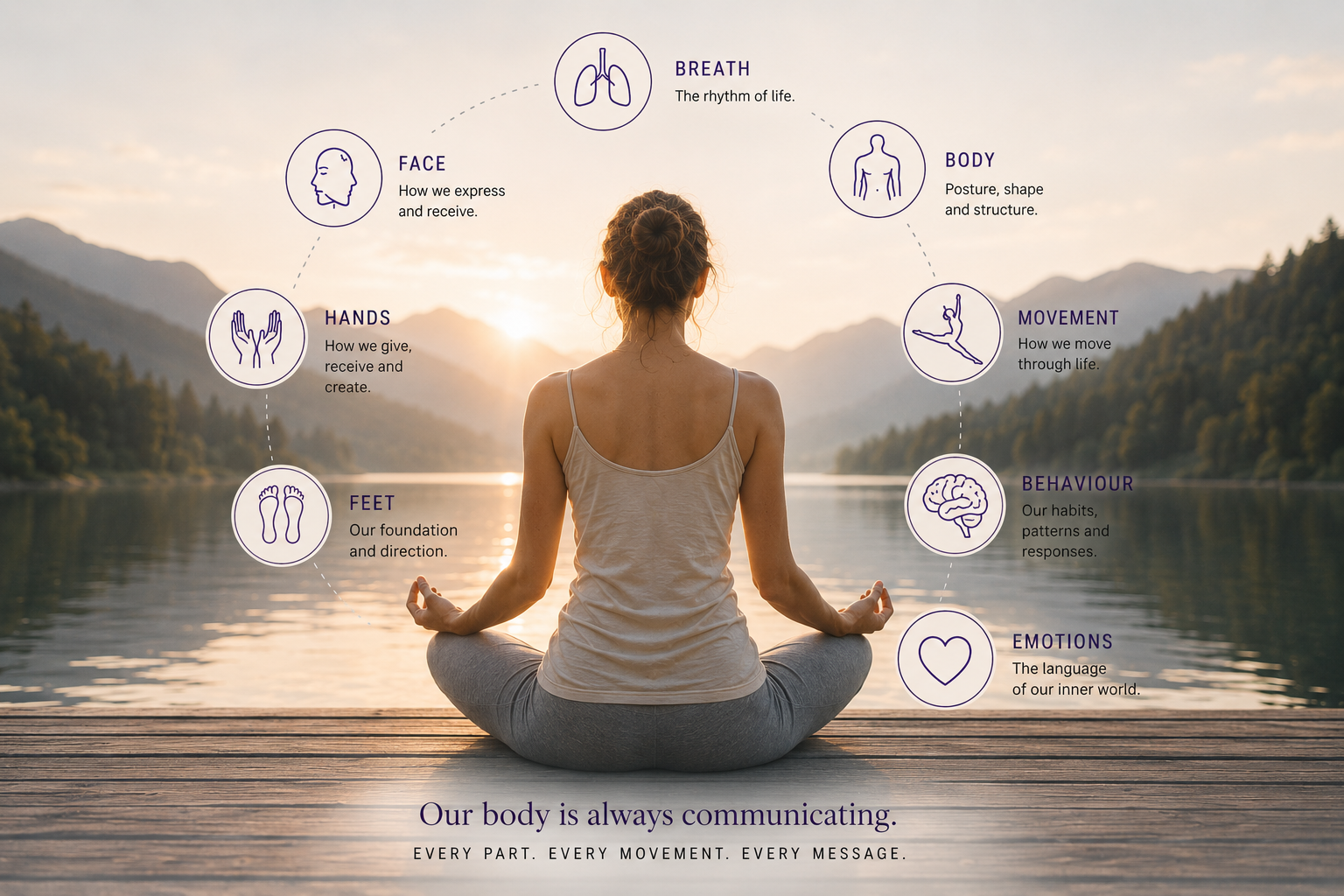
The body communicates through posture, breathing, movement, muscle tone, facial expression, gesture, voice, energy and behaviour.
Rather than deciding what it means, we begin by observing with curiosity and respect.
Awareness Changes the Conversation
AWARENESS

+ UNDERSTANDING
= CHOICE
Awareness gives us greater choice:
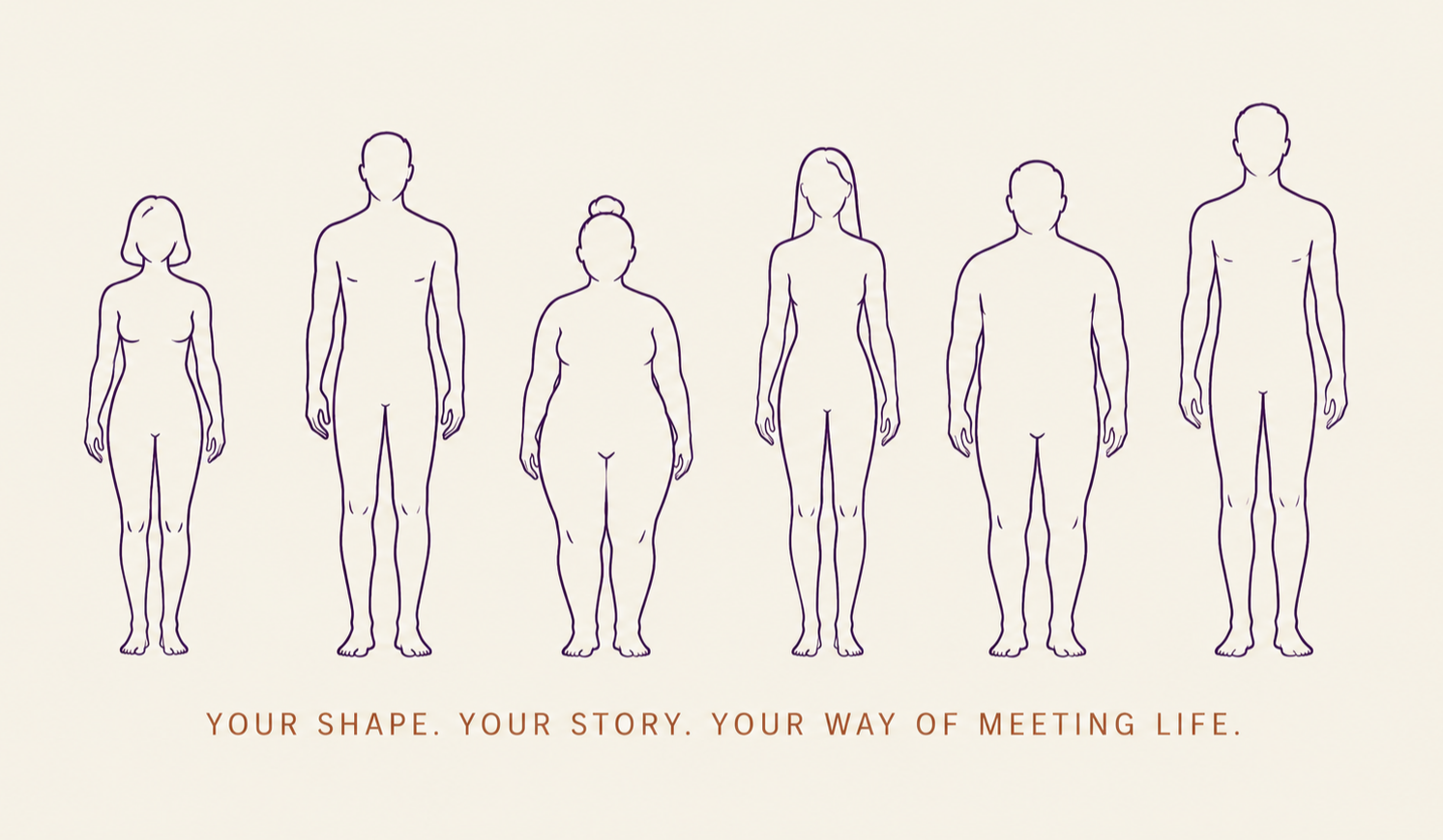
Emotional Anatomy is Individual
There is no one meaning for every body.
Each person brings their own history, relationships, beliefs, culture and experiences.
What About Triggers?
Sometimes the present reminds the body of the past.

The body may respond before we have words for it.

The response is real - even when the original experience is no longer happening.

We don't need to judge the response
Rather than immediately asking "How do I stop this?" or deciding what the response means, Emotional Anatomy invites us to become curious.
-
What happened just before I felt this?
-
What changed in my body?
-
Does this response feel familiar?
What is my body responding to?
Your Emotional Anatomy Can Change
The body is always adapting. New experiences create new information, new pathways and new possibilities.
The same intelligence that helped shape our adaptations also gives us the capacity to continue adapting.
We are always becoming.
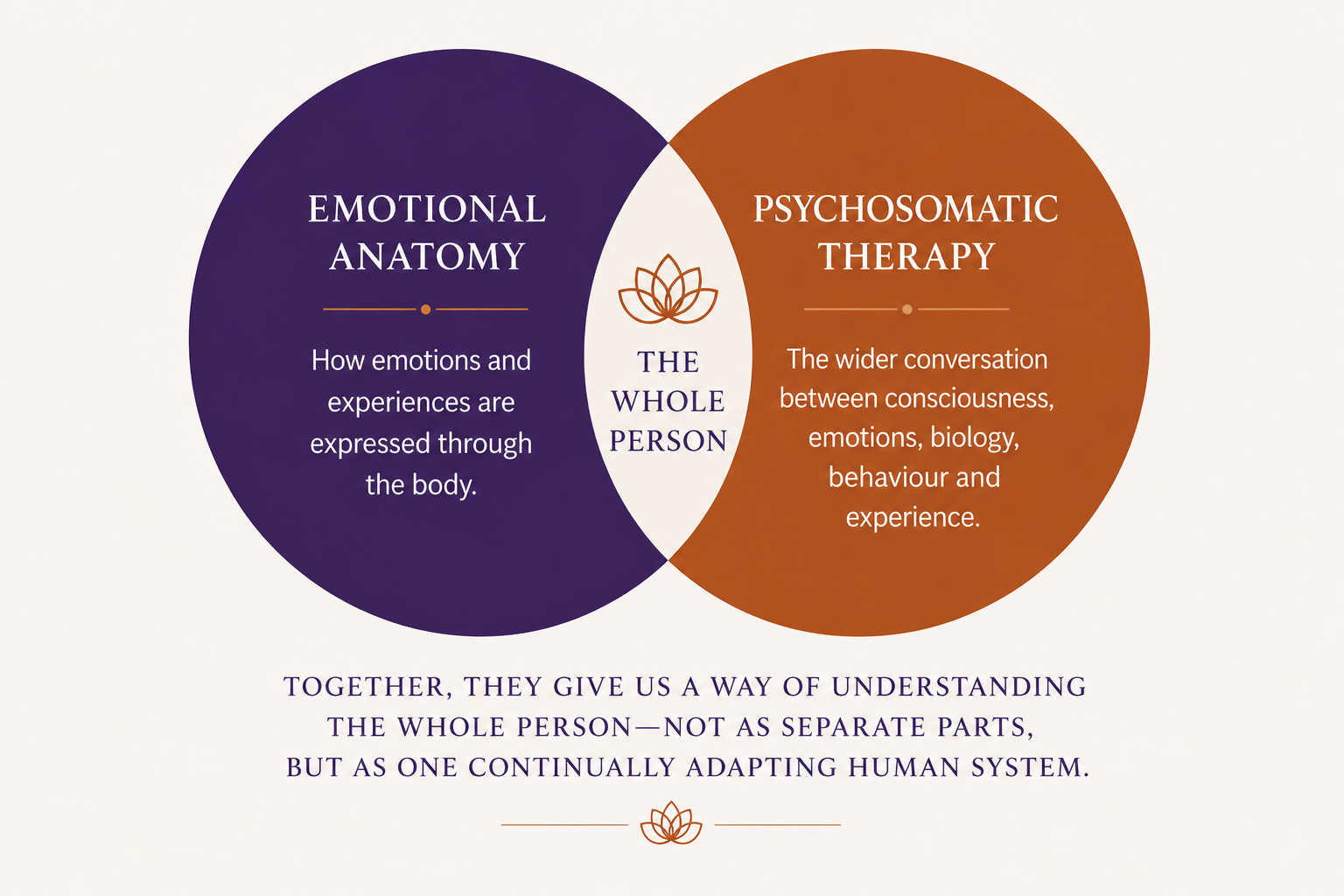
Emotional Anatomy & Psychosomatic Therapy
Two ways of understanding the same human conversation
Together they help us understand the whole person.
The Key is Awareness
Psychosomatics & Emotional Anatomy is about learning to listen - to recognise the relationship between what we think, what we feel and what our body expresses.