
Learn the Language of Being Human - Then Learn to Work With It
Practitioner Certification
The PEAT Professional Pathway is for those who want to take their understanding of Psychosomatics & Emotional Anatomy beyond personal development and into professional practice.
Beginning with yourself, you will develop an understanding of the relationship between the body, mind, emotions, energy, behaviour and lived experience - before learning to bring that understanding into your work with others.
CERTIFIED PSYCHOSOMATIC THERAPIST USING THE PEAT METHOD
EXPLORE THE PROFESSIONAL PATHWAY ↓
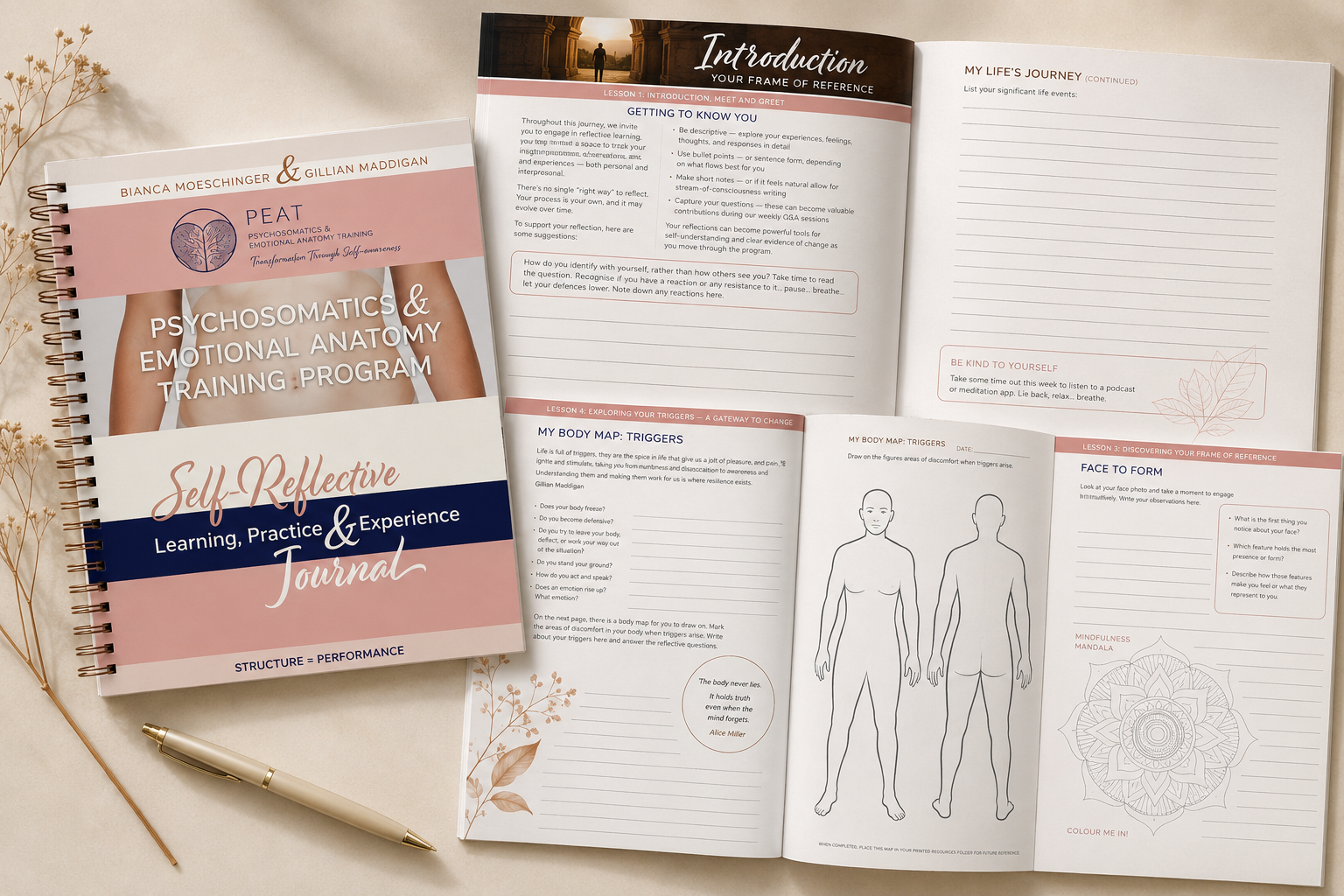
Before we teach you to work with others
We Begin With You
At PEAT, we believe becoming a practitioner begins with developing your own awareness.
Because the more deeply your understand the language within yourself, the more clearly you can begin to observe it in another person.
Personal development isn't separate from practitioner training. It is where practitioner development begins.
The Professional Pathway
FOUNDATION PROGRAM
6-DAY IN-PERSON TRAINING
PRACTITIONER DEVELOPMENT - LEVEL 2
FULL CERTIFICATION
CERTIFIED
PSYCHOSOMATIC THERAPIST
LEARNING TO WORK WITH A HUMAN BEING
A Psychosomatic Therapist learns to bring together what they see and witness through the:

But no single observation tells the whole story.
Practitioner development is about learning to bring these different expressions into conversation with the person standing in from of you.
And to discover what may be meaningful for this person, rather than deciding what their body means for them.
EXPLORE THE FOUNDATION PROGRAMPRACTITIONER DEVELOPMENT - LEVEL 2
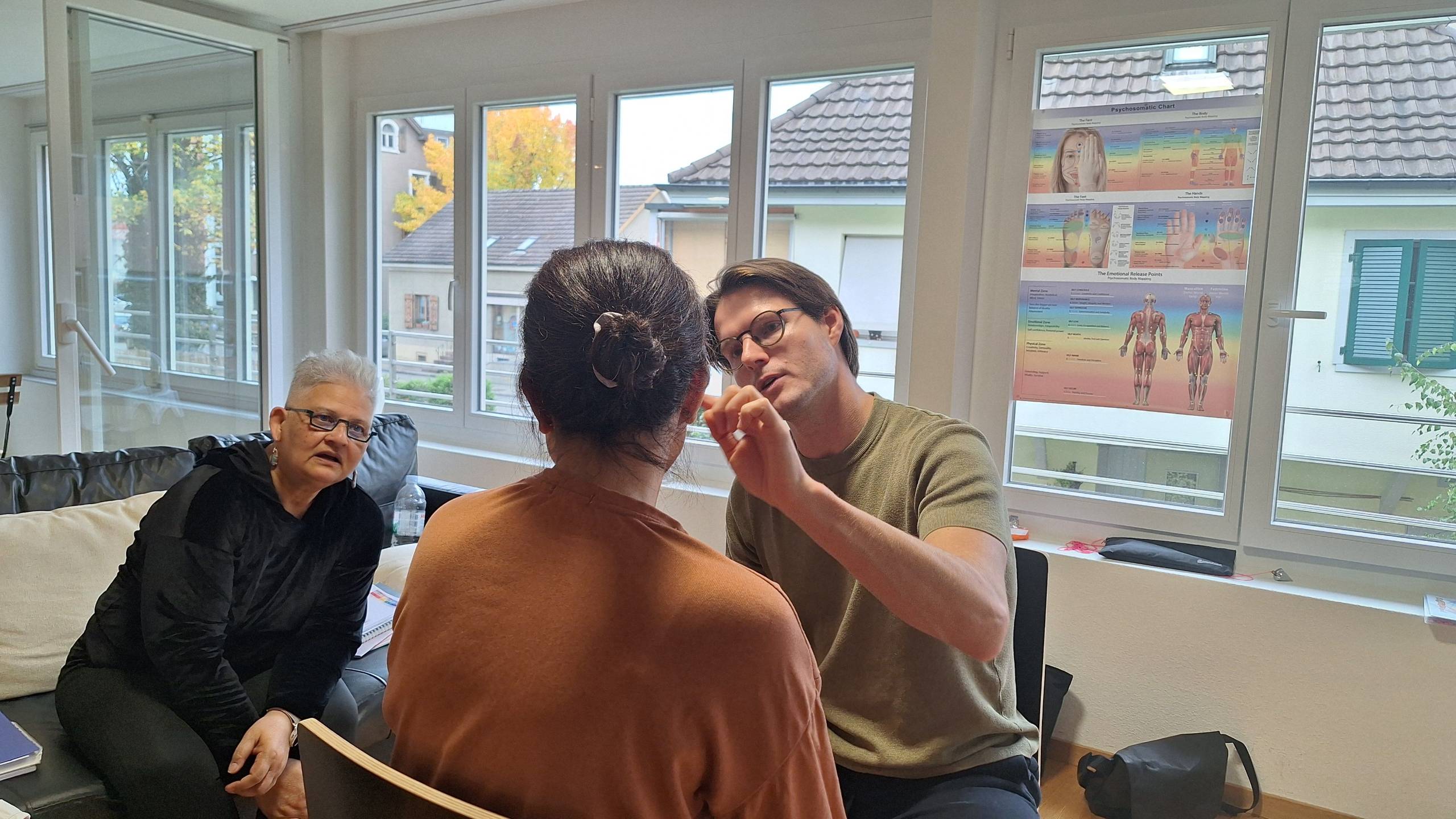
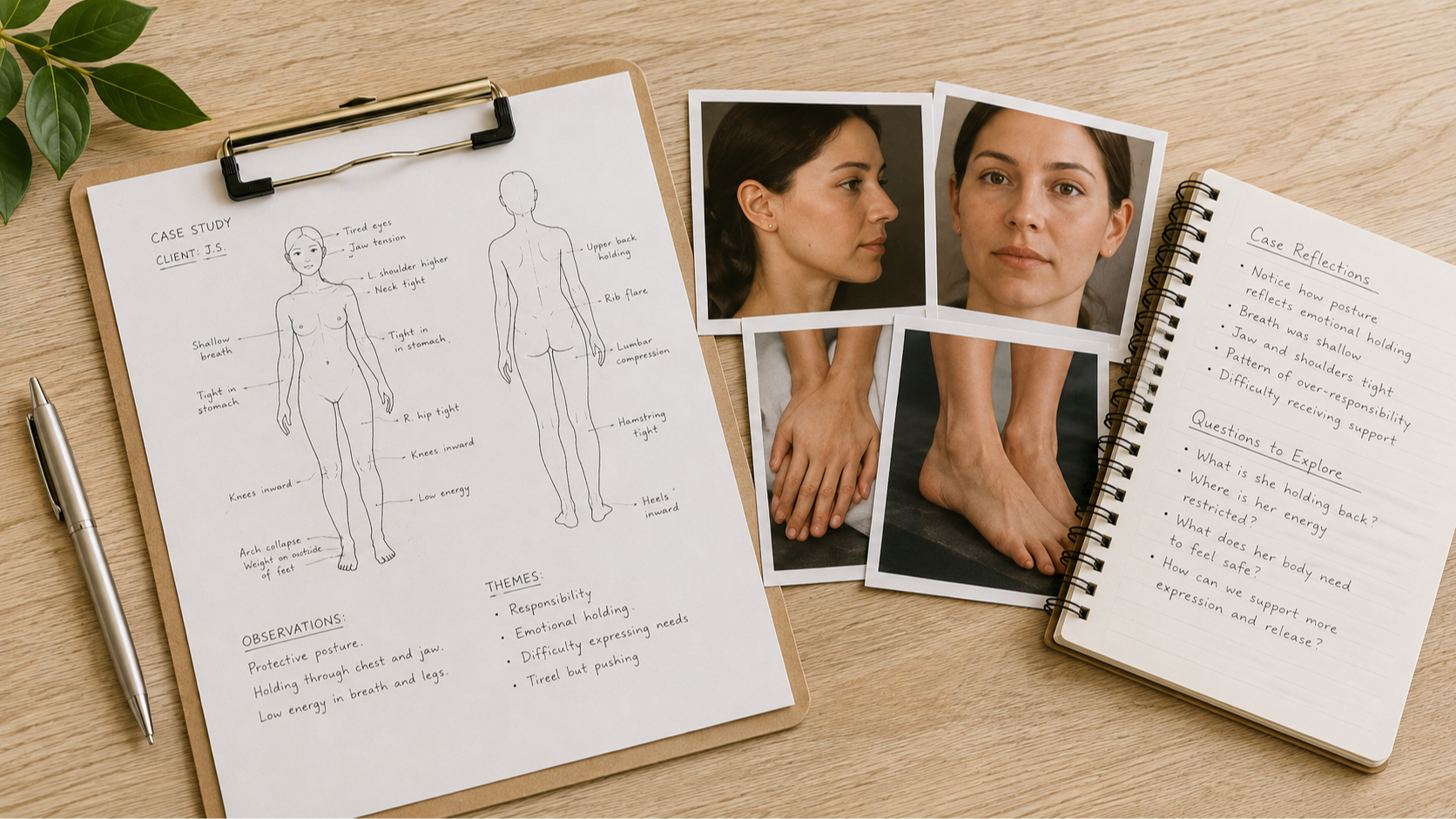
Knowledge Becomes Practice
This is where your perspective begins to widen from understanding yourself to learning how to work with another person.
Your practitioner development brings together.

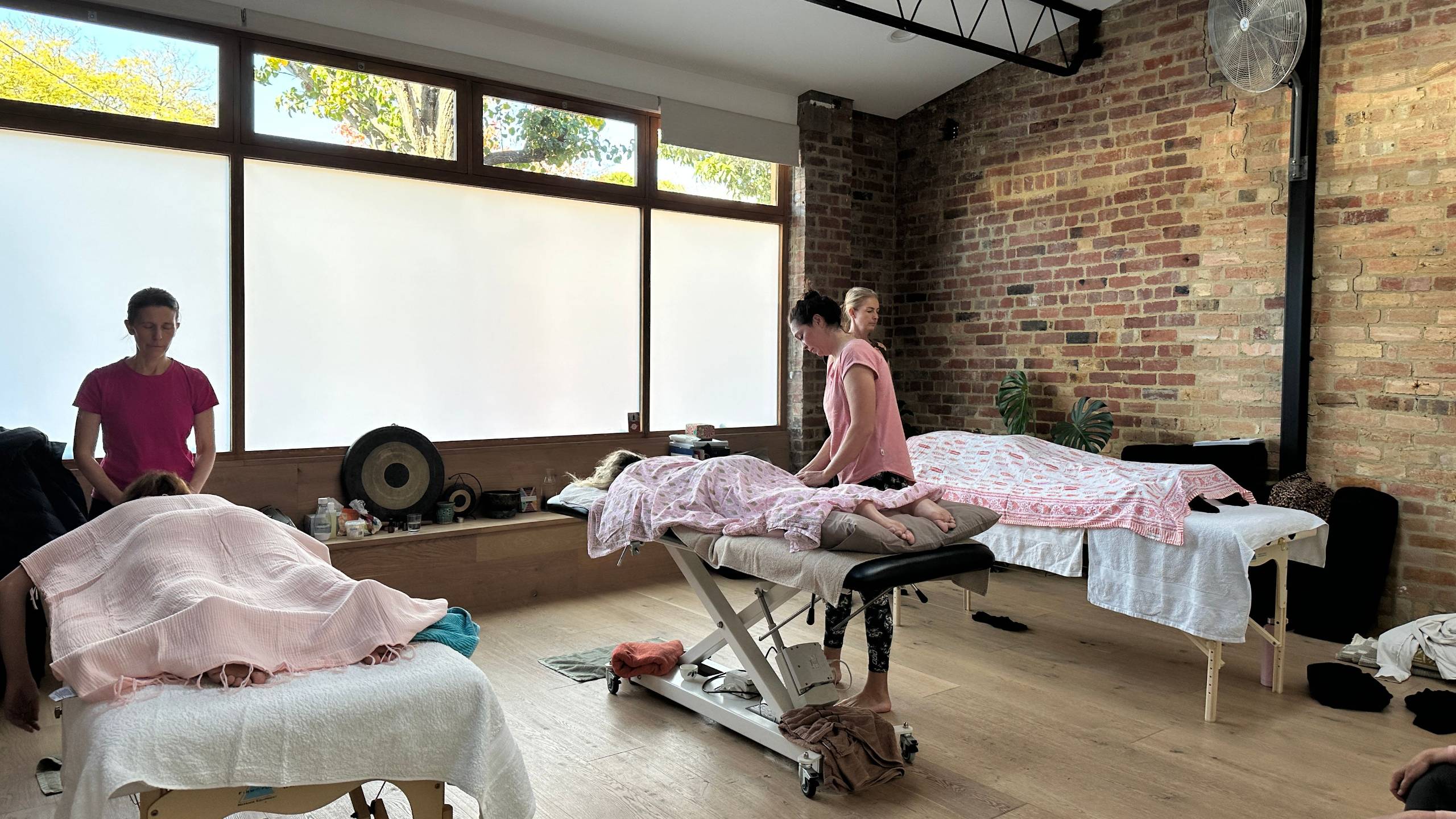
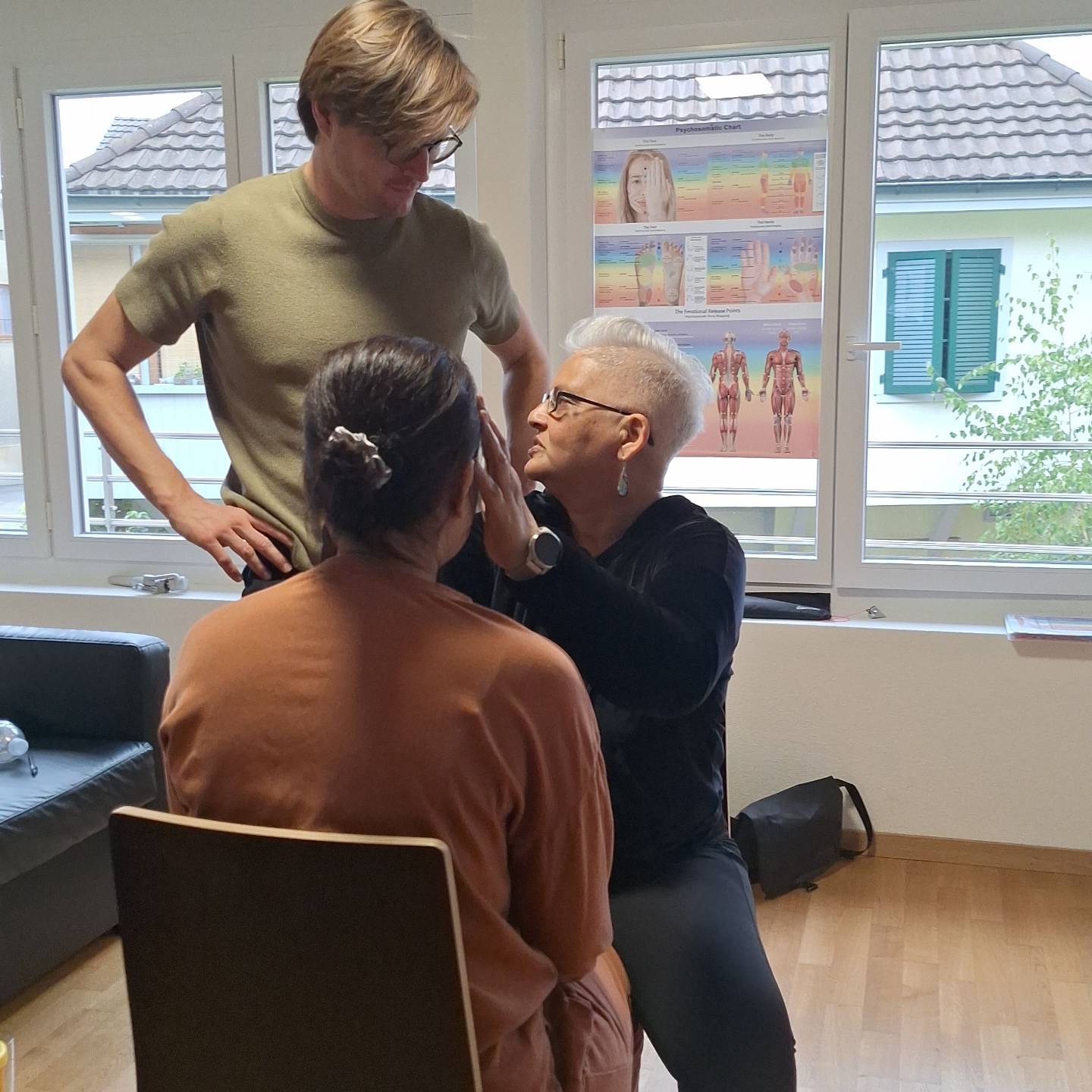
MAKE THE WORK YOUR OWN
PEAT Gives You a Framework - Not a Formula
Not every graduate will practice in the same way.
You may establish a Psychosomatic Therapy practice or bring PEAT into workyou already do - from bodywork, yoga and movement to coaching, natural therapies, wellness or another field entirely.
Throughout your practitioner development, we help you recognise your own strengths and interests so that the PEAT Method becomes something you understand deeply enough to use authentically.
FROM PRACTITIONER DEVELOPMENT TO FULL CERTIFICATION
Completing Your Professional Pathway
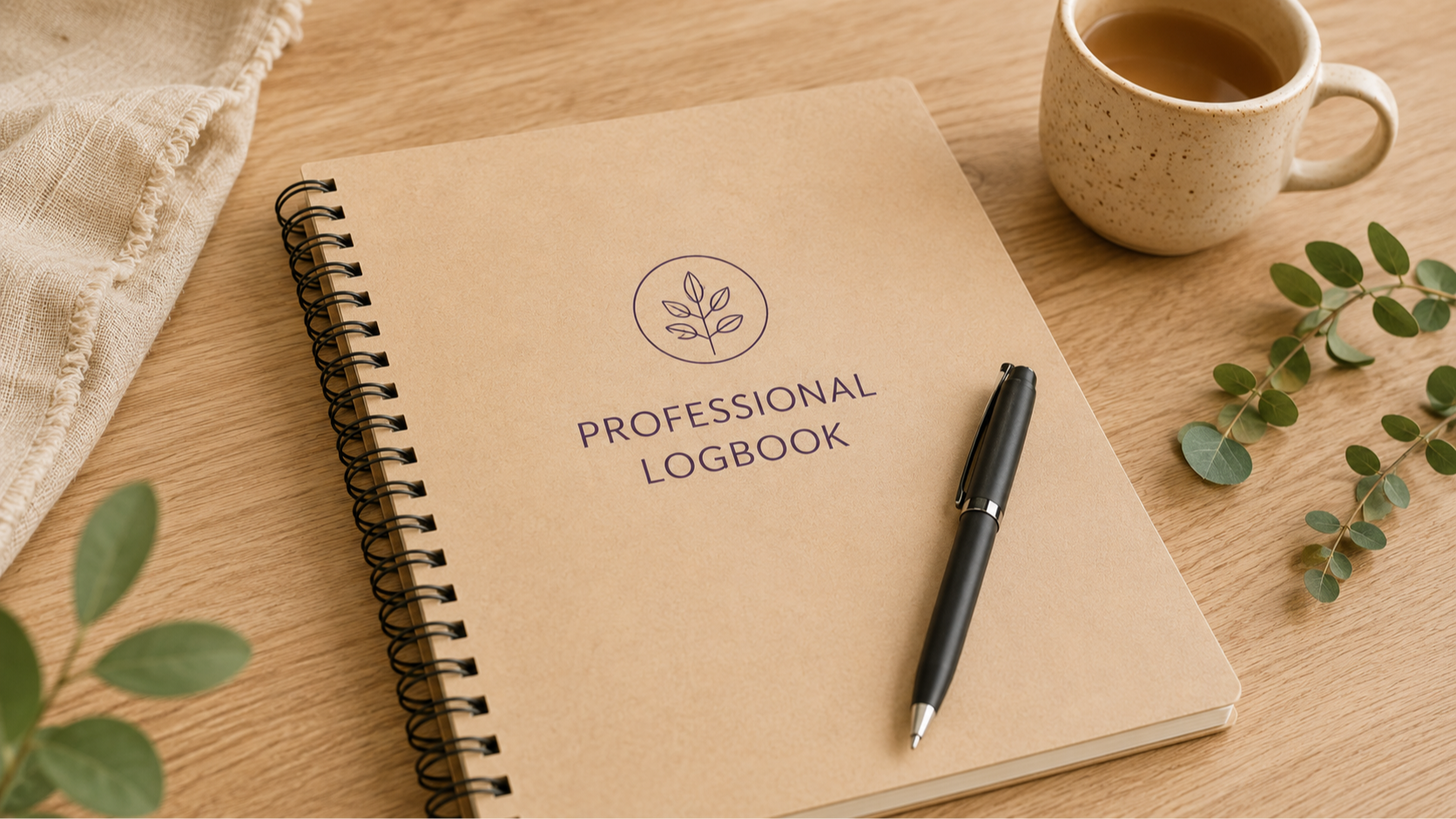
For those pursuing Full Certification in Psychosomatic Therapy, you will have 12 months to complete your professional logbook following your first year of the PEAT Foundation Program and the 6-Day In-Person training.
This gives you time to practice, integrate your learning and build experience working with others.
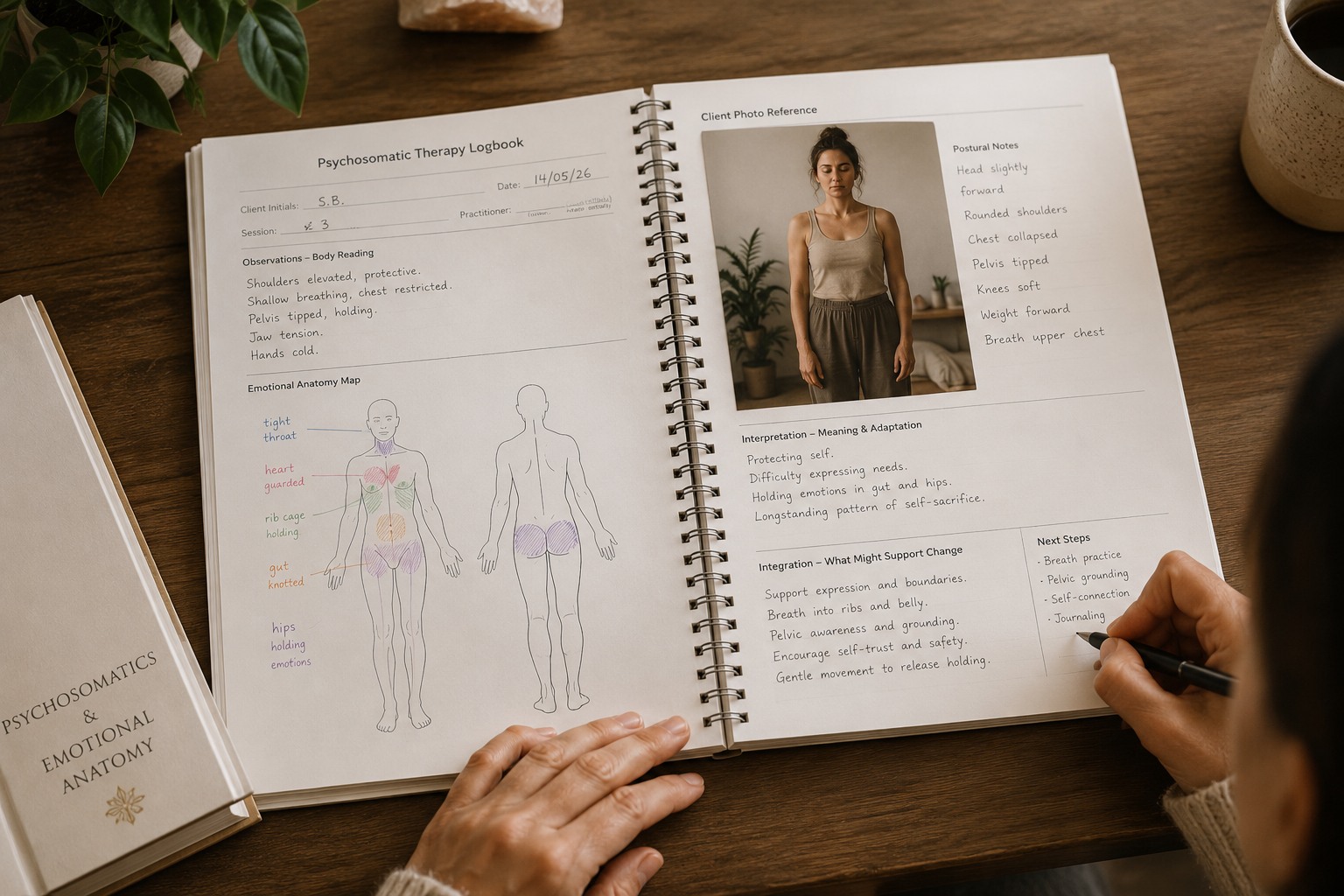
Your logbook includes:
THE FINAL STEP

Rhiannon Denver
The PEAT in person training program exemplifies perfectly the value of this unique modality; Psychosomatic Therapy. The in person learning, practice and development is invaluable.
Psychosomatics centres on enriching the relationship between the mind and body. Our existence here and now has us unable to ignore the body, nor the internal mental and emotional journey we have through life. So why not embrace bringing the mind, body and heart altogether?
Following the provision of online learning and theory PEAT provides, we immersed ourselves learning in the flesh what story our bodies and minds express and how to move towards realignment. We delved deep into witnessing and participating in processes that will allow us practitioners to enable others on their journey to better their overall wellbeing.
The time was with two masters in the therapy, who welcomingly provided a safe space, professional standards and shared willingly their knowledge, skills and past experiences.
This training is something that has to be done. There is no replacement for the real thing and what it leads to after.
Thank you Bianca, Gillian and the amazing crew who we quickly grew with together.

Felicity Fowler
The 6-day course co-facilitated by Bianca and Gillian was a truly grounding and personally integrative experience offering structured theory, bodywork application, and seeing how authenticity delivers real outcomes to change tissue and emotional release from the body.
Once there is awareness of energy centers or chakra imbalance and how it shows up in the body, we can truly focus on how to assist clients, and Bianca’s and Gillian’s differing styles provided great insight and motivation to find our own individual approach.
Thank you so so much for such rich insight and teaching.

Michelle Reichman
What a challenging but awakening experience to fully immerse yourself into a small group of like minded but vastly different people to experience growth on an individual and collective level. For anyone who choses to venture into further understanding themselves and others this course will offer you much growth both personally and professionally.
Bianca and Gillian offer a richness of information delivered in uniquely differing styles which caters for a variety of people and ensures the richness is received depending on what resonates with you at the time of receiving.
I feel that this richness is a gift that will continue to keep giving well beyond the completion of this course.
Thank you for providing me with this opportunity for such deep and profound self reflection.

Fiona
It's been a while just wanted to say Hi and let you know I'm soo in love with the course and soo challenged at the same time. I love it.
Work has been hectic and lots of changes but I guess that's a part of life. I've had to slow down and slow down even more.... the hard part was to tell myself it's ok to slow down and experience it.
Module 3 and 4 were not so easy but i still powered through.... Module 5 now tells me it's ok I'll get it..
Just wanted to thank you, the course is soo beautifully put together... thank you :)
IS THIS PROFESSIONAL PATHWAY FOR YOU?
You don't need to arrive knowing exactly what your future practice will look like.
This pathway may be for you if you want to:
- Develop a deeper understanding of people, emotion, energy and the body
- Work with people in a meaningful way
- Bring a psychosomatic perspective into an existing profession
- Develop practical experience rather than knowledge alone
- Undertake your own personal development alongside professional learning
- Develop your own way of working rather than following a formula
FREQUENTLY ASKED QUESTIONS
Do I need to know that I want to become a practitioner before I begin?
Do I have to offer bodywork to become certified?
When do I complete the 6-Day In-Person Training?
How long does the Professional Pathway take?
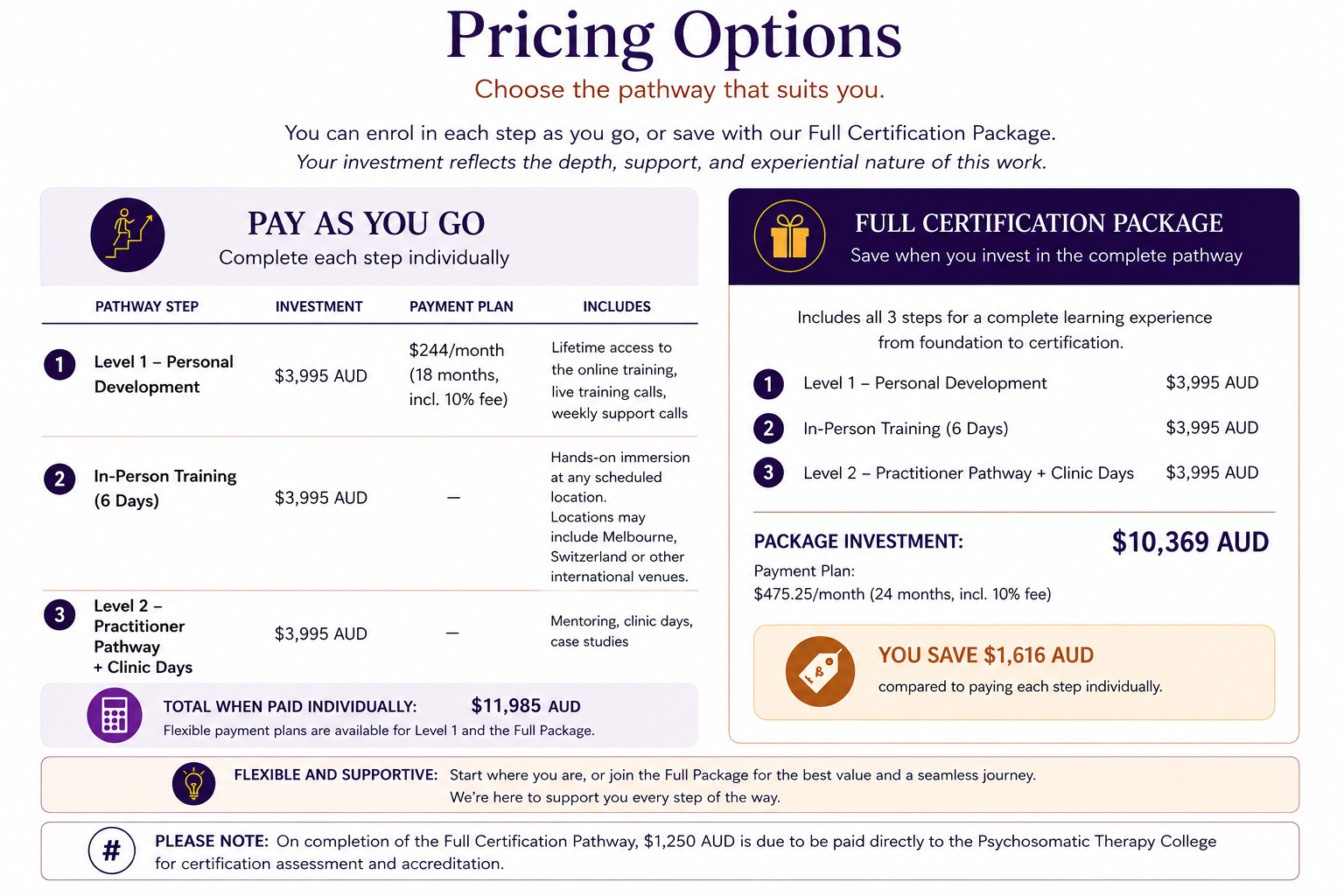
Are there additional costs for Full Certification?
What qualification will I receive when I complete the full pathway??
YOUR PATH DOESN'T HAVE TO BE DECIDED TODAY
Some people begin PEAT knowing they want to become practitioners.
Others begin because they want to understand themselves.
And somewhere along the way, the direction changes.
You can begin with the Foundation Program or experience the work through the 6-Day In-Person Training before deciding whether the professional pathway is right for you.
Ready to Explore the Professional Pathway?
If you're considering becoming a Psychosomatic Therapist, we'd love to meet you.
Complete the short application and we'll arrange an online conversation to talk through where you are, what you're looking for and the pathway ahead.
START THE CONVERSATION